In a nutshell
- ☀️ UVA is year-round in the UK, penetrating cloud and glass; low-angled winter sun plus reflections from wet pavements, frost, sea and snow create cumulative exposure.
- 🧴 Choose broad-spectrum protection with the EU UVA seal; daily SPF 30 suits most routines, while SPF 50 isn’t always better unless you apply it generously and reapply.
- 🕶️ Build a simple ritual: moisturiser + SPF + lip SPF; reapply every two hours outdoors; wear UV400 sunglasses, protect ears, hands, and nose, and use brimmed hats for low-glare days.
- 🚸 Tailor for kids, commuters, and outdoor workers: mineral filters for sensitive skin, travel-size SPF for drives as UVA passes windows, and sweat-resistant formulas for prolonged exposure.
- ⚖️ Mineral vs. chemical: minerals offer immediate, gentle protection but may leave a cast; chemical formulas layer better. The best choice is the one you’ll apply liberally and consistently.
Winter in Britain is defined by slate-grey skies, short days, and a low-angled sun that sneaks beneath hats and visors. That makes it easy to forget about sun protection until a wind-chapped nose tells a different story. Dermatologists remind us that UVA rays are present year-round and penetrate cloud and glass, quietly driving photoageing and pigmentation. Add reflective surfaces—wet pavements, frost, sea spray on coastal walks, even occasional snow—and exposure climbs. Cold air dulls our alarm bells, but UV doesn’t hibernate. This expert guide distils UK-specific strategies, field notes, and up-to-date product advice so your skin habits stay as seasonally sharp as your winter layers.
Why Winter Sun Still Matters in the UK
The UK’s low winter sun behaves differently from its July counterpart. While UVB drops with the sun’s angle (which is why you’re less likely to burn in December), UVA remains steady. UVA is the spectrum associated with premature ageing and deep skin damage, and it penetrates cloud cover and car windows. That’s why commuters pick up cumulative exposure on the A40 as surely as hikers on Helvellyn—just in slower, stealthier doses.
On assignment in Cumbria, I shadowed a fell runner who never burned in winter but battled stubborn cheek pigmentation by March. The culprit wasn’t altitude alone; it was two hours of UVA reflection off snow and waterlogged paths several times a week. In cities, glass facades and wet pavements bounce stray rays at eye level. Coastal runners face sea-glare even on overcast days. Think of winter exposure as “lower intensity, longer duration”, where small daily increments add up. The fix isn’t fear—just smarter, consistent protection tuned to Britain’s particular light.
Decoding UVA, UVB, and SPF in Cold Weather
SPF measures UVB protection (burning), not UVA. For winter, prioritise broad-spectrum sun cream with a visible UVA seal (the EU “UVA in a circle”) or PA rating. Pairing SPF 30 with reliable UVA coverage is usually the sweet spot for the school run, the commute, or a lunchtime jog. UVA drives ageing and uneven tone, so don’t rely on SPF alone—check the UVA badge. Antioxidants—vitamin C, E, or resveratrol—support your barrier against pollution plus low-level UV, a typical UK winter double act.
- What to look for: “Broad-spectrum,” EU UVA seal, comfortable wear under moisturiser or makeup, fragrance-free if your skin is reactive.
- Texture matters: Gels for sporty days, creams for dryness, tints to even tone without a heavy base.
Why SPF 50 Isn’t Always Better: It can be excellent for high-glare days (snowy hikes, coastal spray), but daily UK winter life often benefits more from SPF you’ll apply generously and reapply. SPF 50 that pills under your scarf won’t outperform a well-loved SPF 30 you use correctly. The rule: choose the highest protection you’ll wear in the right amount—two finger-lengths for face and neck—and top up when exposure extends.
Practical Protection: Skincare, Clothing, and Gear
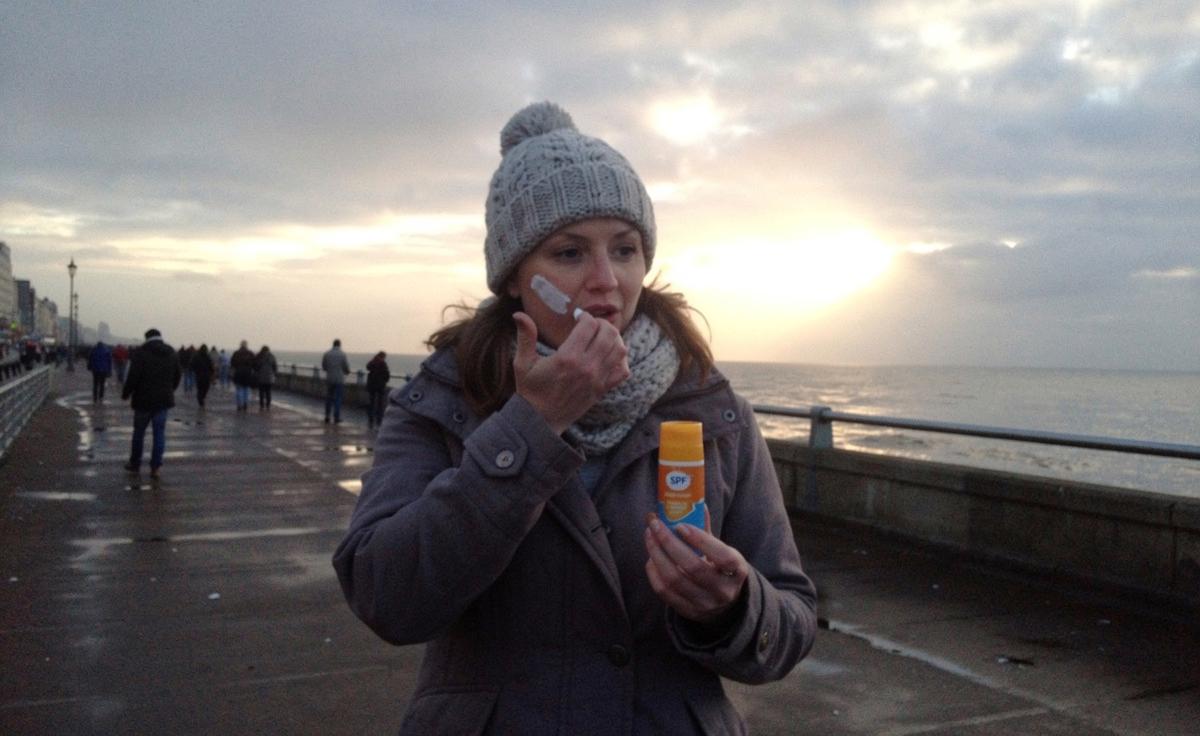
Build a simple winter ritual: moisturiser to buffer cold winds, broad-spectrum SPF, then lip balm with SPF. Reapply every two hours outdoors, and after heavy scarf friction or sweating. Sunglasses with UV400 lenses beat squint lines and shield delicate under-eyes; go for wraparound styles on blustery coastal paths. A beanie with a small brim helps low-angled glare, and a high-collar jacket limits reflected light on the neck. Don’t forget ears, the back of the hands, and the tip of the nose—classic winter “hot spots.”
| Month | Typical Midday UV Index (UK) | Risk Factor | Quick Tip |
|---|---|---|---|
| November | 0–1 | UVA through cloud & glass | SPF 30 daily on face, hands; UV400 shades for low sun |
| December | 0–1 | Glare from wet pavements | Keep a pocket-size SPF for top-ups on commutes |
| January | 0–1 | Snow/frost reflection inland | Use SPF 50 and balm on exposed climbs |
| February | 1–2 | Sun angle rising | Extend SPF to neck/ears before weekend hikes |
- Indoor note: UVA penetrates windows; desk workers by a bright window still benefit from daily SPF.
- Makeup users: Treat SPF as skincare step. Foundations with SPF help but rarely replace a dedicated layer.
Special Cases: Kids, Commuters, and Outdoor Workers
Children: Smaller surface area, thinner skin, and pram-height glare from puddles make winter protection worthwhile. Choose mineral filters if sensitivity flares, apply before the school run, and pack a stick for teachers on sunny playground days. Hats and UV400 sunglasses aren’t just summer kit; they tame wind, brightness, and stray rays.
Commuters and drivers: Car and train windows block most UVB, not all UVA. Keep a travel-size SPF in your bag and top up on cheeks and hands before long drives down the M1. Anti-glare lenses reduce eye strain when the sun sits low over the Thames at rush hour.
Outdoor workers and athletes: Builders, postal staff, cyclists, and runners collect steady exposure. Consider sweat-resistant formulas and lip SPF. Cold air masks evaporate quickly; a richer moisturiser under SPF stops tightness and improves adherence. For shift work starting in the dark and ending in bright afternoon sun, set a phone reminder to reapply at lunch. Consistency beats intensity when it comes to winter UV.
Pros vs. Cons: Mineral vs. Chemical Sunscreens in Winter
Mineral (zinc oxide, titanium dioxide)
Pros:
- Immediate protection after application; no wait time.
- Often gentler for sensitive or rosacea-prone skin.
- Reliable UVA coverage from zinc oxide.
Cons:
- Can leave a white cast, especially on deeper skin tones.
- Heavier textures may pill under scarves or beanies.
Chemical (organic filters like Uvinul, Tinosorb, etc.)
Pros:
- Lightweight, elegant textures that layer well under makeup.
- Less visible on camera or video calls.
Cons:
- May sting watery eyes in wind; choose eye-safe formulas.
- Needs a brief set time before full protection.
In UK winter, the best choice is the one you’ll apply liberally and reapply. For office days, a silky chemical SPF under moisturiser may win. For frosty hikes, a mineral or hybrid with robust UVA sealing and SPF 50 is a safe bet. Layer with a barrier cream if windburn looms.
British winters aren’t tropical, but their light is deceptively potent. Daily broad-spectrum SPF, UV400 eyewear, and simple reapplication habits protect skin without fuss, whether you’re pacing the Cornish coast path or waiting for the 38 bus on a bright, icy morning. Treat SPF like a seatbelt: you don’t notice it until the day you need it. Small, consistent actions now prevent bigger repairs later. As the sun climbs toward spring, which winter-proof habit will you adopt first—and how will you build it into your everyday routine so it actually sticks?
Did you like it?4.5/5 (25)